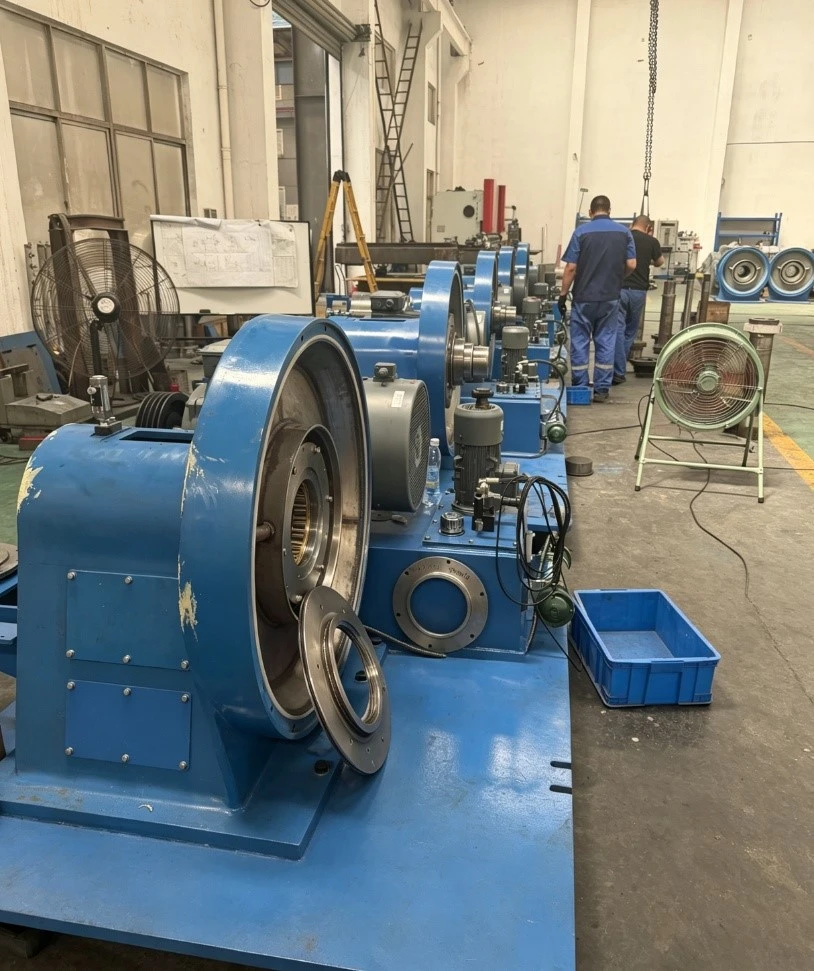
Compound fertilizer is a staple product in modern global agriculture, designed to supply crops with essential nutrients, improve soil fertility, and boost crop yields. Its core nutritional components consist of nitrogen, phosphorus, and potassium. By adjusting the proportion of these three elements, compound fertilizers can meet the targeted growth needs of various crops at different growth stages. In commercial compound fertilizer production, solid-liquid separation, material dehydration, and impurity purification are core processes that directly determine finished product purity, moisture content, nutrient utilization rate, as well as production cost and environmental compliance level. Our industrial concentrating and high speed centrifuge machine are professionally optimized for diverse compound fertilizer production and by-product purification processes, effectively solving key industry pain points and delivering reliable performance in nitrogen, phosphorus, and potassium material processing and high-efficiency water-soluble fertilizer production.
Application in Advanced Potassium Sulfate Compound liquid centrifugal separator
Potassium chloride has obvious limitations in agricultural application. Direct surface spraying or soil application will lead to chloride residue on crops and in soil. It not only deteriorates crop quality and commodity value but also causes long-term soil salinization and hardening, damaging the ecological balance of farmland. For this reason, premium commercial compound fertilizers universally adopt potassium sulfate as the preferred potassium source. It features mild nutrient release, zero soil pollution, and wide crop adaptability, making it the mainstream high-quality raw material in the fertilizer industry.
Nevertheless, the traditional potassium sulfate production process suffers from high raw material costs, bringing long-term economic pressure to fertilizer enterprises. With the explosive growth of the global new energy industry, a large amount of sodium sulfate is generated as a by-product in power battery production. Meanwhile, salt manufacturing also produces massive sodium sulfate and sodium chloride by-products. These industrial inorganic salt by-products are difficult to treat and recycle, becoming a universal industry bottleneck.
To realize resource recycling and cost reduction, a new eco-friendly production process has been widely promoted in the industry: producing potassium sulfate via the double displacement reaction of sodium sulfate and potassium chloride. The reaction yields two valuable products: high-purity potassium sulfate for premium compound fertilizers and sodium chloride (edible salt). This innovative process turns industrial waste into reusable resources, greatly cuts down raw material investment, and achieves outstanding economic and environmental benefits.
Precise dehydration and purification of inorganic salt materials are the core technical challenges of this new process. Traditional enterprises rely on reverse osmosis membrane systems for desalination and purification. However, industrial sodium sulfate and crude salt contain a large number of impurities and suspended solids, which easily clog and contaminate reverse osmosis membranes. This drastically shortens membrane service life, increases equipment replacement costs, and causes frequent production line shutdown losses.
Our independently developed high speed centrifuge machine perfectly match the inorganic salt synthesis process, serving as an ideal alternative to traditional reverse osmosis pre-treatment and deep purification systems. The equipment efficiently completes solid-liquid separation, impurity filtration, and deep dehydration, removing turbidity and contaminants thoroughly to produce high-purity potassium sulfate fertilizer raw materials and standard sodium chloride products. It fundamentally solves the defects of short membrane service life and high maintenance costs of traditional membrane treatment technology. While stabilizing finished product quality, our sludge dewatering decanter centrifuge help clients reduce production costs, improve resource utilization efficiency, and realize green and sustainable production, serving as core supporting equipment for modern recycled compound fertilizer manufacturing.